Hidden Environmental Risks in Real Estate: What Buyers and Developers Often Miss
Environmental issues in real estate are rarely obvious at the beginning of a transaction. A property may look fully renovated, commercially successful, or ready for redevelopment while still carrying environmental problems tied to uses that disappeared decades ago. That disconnect is what makes environmental due diligence so important. Many buyers assume environmental problems are limited to heavy industrial properties or active manufacturing facilities. In reality, some of the most common environmental issues stem from ordinary commercial uses that existed long before current ownership. Former dry cleaners, gas stations, automotive shops, and industrial facilities often left behind contamination that can remain in soil or groundwater long after the original business closed. In many cases, modern buildings now sit on top of historical environmental conditions that are not visible from the surface. For real estate investors, developers, and commercial property owners, one of the biggest risks is inheriting a problem they did not create and did not know existed.
Why Historical Property Use Matters
One of the recurring themes in environmental real estate disputes is the “legacy problem.” Environmental conditions frequently originate from historical uses that current owners had nothing to do with. A site that currently operates as an office building, retail center, or apartment complex may have housed a dry cleaner or gas station decades earlier. Even when those operations disappeared generations ago, contamination associated with those businesses can remain. That reality often surprises buyers because the property no longer resembles its historical use. This issue becomes especially important in urban redevelopment, where many desirable properties have long commercial histories. Buyers sometimes focus heavily on location, redevelopment potential, or acquisition pricing without fully investigating the site’s environmental background. That can become a significant problem later if contamination is discovered during development, financing, or regulatory review.
The Importance of Environmental Due Diligence
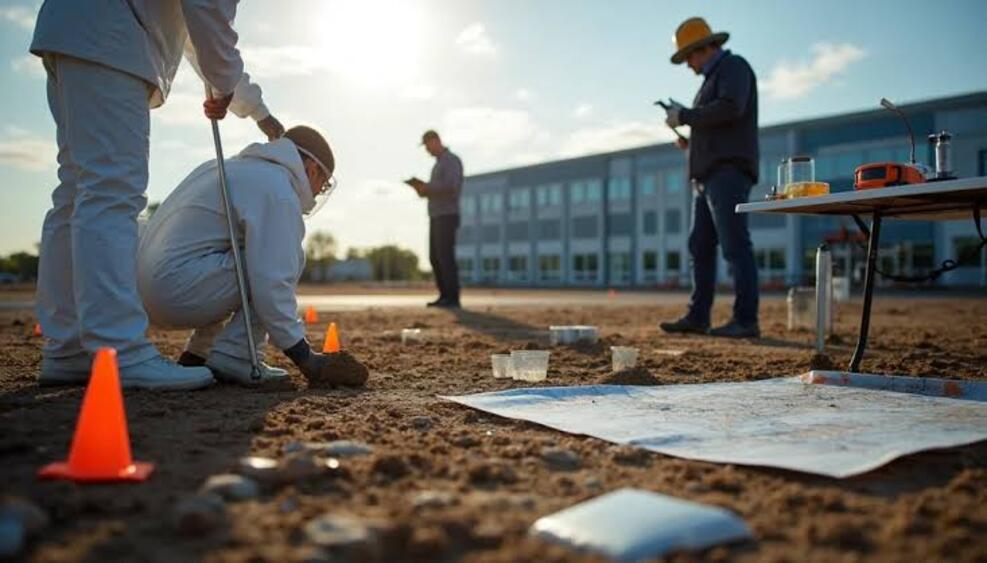
Environmental due diligence is often the difference between identifying a manageable issue early and discovering a costly problem after acquisition. The process typically begins with a Phase I Environmental Site Assessment, which reviews historical records, prior uses, aerial photographs, regulatory databases, and surrounding site conditions to identify potential environmental concerns. If concerns are identified, additional investigation may follow through soil, groundwater, or vapor testing. While buyers sometimes view this process as a formality, environmental review can directly affect the economics of a transaction. Environmental conditions may impact financing, redevelopment timelines, insurance coverage, cleanup obligations, and future property value. Properties that initially appear to be exceptional deals occasionally carry hidden environmental conditions that significantly alter the long-term cost of ownership.
The Misunderstanding About “As-Is” Sales
One of the most common misconceptions in commercial real estate is the belief that selling a property “as-is” completely eliminates liability. Environmental law does not always work that way. In many situations, parties can still face liability if contamination occurred during their ownership or operations, even after the property changes hands. Likewise, buyers can inherit obligations associated with contaminated property regardless of whether they caused the original release. That structure often surprises people because environmental liability operates differently from the fault-based framework many expect in ordinary business disputes. From a practical perspective, environmental laws focus heavily on ensuring contamination gets investigated and addressed, which means liability frequently follows ownership, operation, or control of the property.
Why Environmental Litigation Becomes So Expensive
Environmental litigation is often far more expensive and time-consuming than people expect. Unlike ordinary contract disputes, environmental cases rely heavily on technical and scientific analysis. Questions involving groundwater movement, historical operations, chemical use, and contamination pathways often require environmental consultants, engineers, hydrogeologists, and expert witnesses. Even determining basic issues such as where contamination originated or how long it has been present can involve years of investigation and substantial expert analysis. As a result, environmental disputes frequently become expensive long before trial begins. The complexity of the science also creates another challenge: uncertainty. In many environmental cases, parties spend significant time and money reconstructing historical conditions from decades earlier using incomplete records and technical sampling data.
The Human Side of Environmental Litigation
Environmental disputes are not only financially difficult. They are often personally exhausting for the people involved. Depositions, expert testimony, and prolonged litigation can place significant pressure on property owners, operators, consultants, and witnesses. One of the more practical lessons that comes up repeatedly in litigation is the importance of simplicity and clarity during testimony. Witnesses often feel pressure to explain too much or try to “help” their position, but overly complicated answers frequently create additional issues. The most effective testimony is usually straightforward, factual, and limited to what the witness actually knows. Environmental cases are complicated enough on their own. Attempting to overexplain or speculate during litigation often makes the process more difficult rather than more persuasive.
Environmental Risk Is Now Part of Modern Real Estate
Environmental issues are no longer limited to traditional industrial facilities. Today, environmental concerns regularly affect office buildings, mixed-use developments, retail properties, multifamily housing, and urban redevelopment projects. That does not mean environmentally impacted properties should automatically be avoided. Many remain highly valuable and fully usable. The key issue is understanding the property’s history early enough to properly evaluate risk before major financial or development decisions are made. In many situations, the biggest problem is not the existence of contamination itself. It is discovering the issue too late in the process. Successful real estate projects are often the ones where environmental concerns were identified early, investigated carefully, and incorporated into the overall business strategy before they became larger legal or financial problems.